



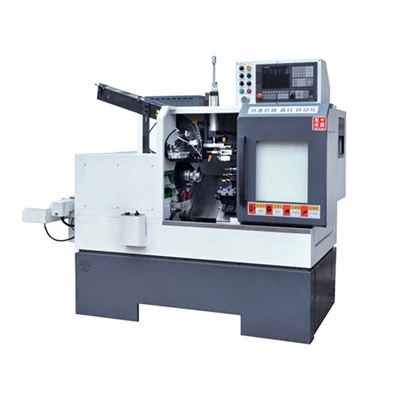
High Precision Slant Bed CNC Lathe
High precision slant bed CNC lathe is a front-feeding, slant-bed CNC lathe designed for mass production requirements. It is specifically engineered for the high-precision, automated machining of complex parts - including short shafts, stepped shafts, disc-shaped components, and tubular workpieces. Featuring an integral 45° slant-bed structure and linear guide rails, and integrated with a pneumatic front-feeding mechanism and a vibratory bowl feeder system, the machine enables automated production modes that allow for unattended operation or a single operator managing multiple machines, thereby significantly enhancing machining efficiency and consistency.

Specifications
|
Model |
0640 |
|
Feeding Method |
Front Feeding (Cylinder Feeding) |
|
Filling Method |
Vibratory Feeder (Optional Elevator) |
|
Discharge Method |
Receiver + Conveyor Belt |
|
Workpiece Length |
10-80mm |
|
Bed Configuration |
Integral 45° Slant Bed with Linear Guides |
|
Control System |
CNC System + PLC |
|
Spindle Structure |
Spindle Unit (4 Front + 2 Rear Bearings) |
|
Spindle Nose |
A2-5 |
|
Spindle Speed |
50-3500 RPM |
|
Broached Through-Hole |
φ40mm (Maximum Bar Stock Diameter) |
|
Clamping Method |
Hollow Rotary Hydraulic Cylinder |
|
Spindle Fixture |
0640 Spring Collet (Optional Hydraulic Chuck) |
|
Motor Power |
4 KW/5.5KW/7.5KW |
|
Tool Holder Type |
Gang-type Tool Holder (Optional Servo Turret) |
|
Chip Removal Method |
Rear-side chip evacuation |
|
X/Z-axis Rapid Traverse Speed X/Z |
24m/min |
|
Maximum X/Z-axis Travel X/Z |
700mm/350mm |
|
Total Machine Weight |
1300kg |
|
Overall Dimensions |
1850×1400×1800 (Length×Width×Height) |
Scope Of Application
Suitable for the automated, high-precision machining of complex features on short shafts, stepped shafts, disc-shaped parts, and tubular components.
Equipment Manufacturing Process
Requirements Confirmation: Communicate with the client regarding workpiece drawings, material specifications, production capacity requirements, and the required level of automation (e.g., whether a vibratory feeder, elevator, or conveyor belt is needed).
Solution Design: Draft the overall structural layout of the machine tool; select the appropriate CNC system; and design the vibratory feeding mechanism, the control logic for the front-feeding cylinders, and the interlocking logic between the workpiece catcher and the conveyor belt. Generate detailed part drawings, assembly drawings, hydraulic/pneumatic schematics, and electrical wiring diagrams.
Trial Run and Factory Inspection: Conduct a continuous dry run (unloaded operation) of the complete machine for a minimum of 24 hours; monitor temperature rise, noise levels, and vibration to ensure full compliance with factory quality standards.
Packaging and Shipment: Apply anti-rust treatment (coating exposed guide rails with anti-rust oil and wrapping them in anti-rust paper). Package the equipment using wooden crates or stretch-wrap secured with steel frames to prevent vibration-induced damage during transit.
After-Sales Service: Provide a one-year warranty and ensure a long-term supply of spare parts. Collect user feedback from clients to continuously optimize the design and assembly processes for future batches of machine tools.
About Qiyang

Taizhou Qiyang Trading Co., Ltd. is a high-tech enterprise dedicated to the research and development, manufacturing, and sales of automated hardware machinery and precision CNC machine tools. By integrating advanced manufacturing expertise and technological resources from across the industry, the company is committed to providing global clients with high-quality machine tools and professional machining solutions.
FAQ
Q1. What is the level of automation when utilizing a vibrating feeder? How many operators are required?
A: By incorporating a vibrating feeder (with an optional elevator), a front-feeding cylinder, a receiving unit, and a conveyor belt, a fully automated operational cycle is achieved. A single operator can oversee multiple units simultaneously, thereby significantly reducing labor costs.
Q2. Is the setup process complicated when switching products?
A: It is simple. When changing workpieces, you only need to adjust the feeding stroke, the collet (or jaws), and the tool offsets. The gang-type tool post allows for rapid tool changes, and the entire process can typically be completed within 30 minutes.
Q3. What is the lead time?
A: For standard models, it takes approximately 20–30 business days; if non-standard automation customization is involved (such as special lifters or tool turrets), it requires 30–45 business days.
Hot Tags: high precision slant bed CNC lathe, China high precision slant bed CNC lathe manufacturers, suppliers, factory
Previous
No InformationYou Might Also Like




Send Inquiry