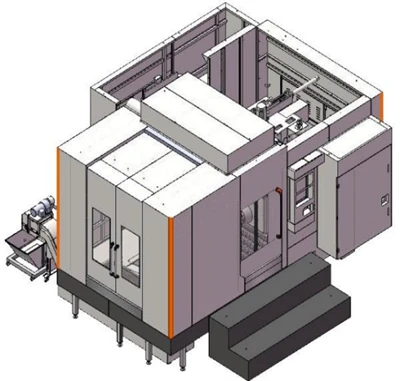
If you’re running a workshop or managing production where auto lathes are the backbone of your operations, you know the last thing you need is mid-shift downtime from overheating. I’ve been working with auto lathe suppliers for years, and one question I get asked all the time is: “What are the actual cooling requirements for these machines?” It’s not just about hooking up a random hose or pouring coolant—get this wrong, and you’ll be dealing with tool wear, dimensional errors, and even a seized lathe before you finish your morning coffee. Let’s break this down like we’re troubleshooting a problem together, no stuffy engineering jargon that makes your eyes glaze over.
First, let’s talk about why cooling even matters for an automatic lathe. These machines run fast—like, really fast. Whether you’re using a High-speed Chamfering Machine for precision edge work, a Precision Automatic CNC Lathe Machine for tight-tolerance parts, or even a Hydraulic Automatic Lathe for heavy-duty turning, every spindle rotation generates heat. That heat comes from friction between the cutting tool and the workpiece, the spindle motor, the gear system, and even the hydraulic components. If that heat isn’t managed, two big issues pop up: thermal expansion and tool degradation. A 0.001-inch expansion on a 6-inch part might not sound like much, but for industries like medical devices or aerospace where tolerances are measured in thousandths, that’s a scrap part and wasted time. Tool wear is even worse—hot tools soften, chip, and break, leading to more changeovers, more labor, and more money down the drain. So cooling isn’t a “nice to have”; it’s the difference between a smooth production run and a headache.
Now, let’s get into the actual cooling requirements, starting with the basics: the cooling system itself. Most auto lathes use a recirculating coolant system, but not all coolants are created equal, and the setup matters. First, the coolant temperature needs to stay consistent. I’ve seen workshops where the coolant tank sits right next to the lathe, and by the end of a 12-hour shift, it’s 15°F warmer than when they started. That’s a problem because the heat transfers back to the machine. The sweet spot for coolant temp is between 60°F and 80°F (15°C to 27°C), with a variance of no more than ±2°F. Any bigger swing, and the workpiece expands or contracts enough to throw off dimensions. For high-speed machines like the High-speed Chamfering Machine, which runs at 10,000+ RPM, that variance is even more critical—smaller, faster parts don’t have room for thermal error.
Next, coolant flow rate and pressure. This isn’t a one-size-fits-all number; it depends on the lathe’s size, the material you’re cutting, and the tool type. For example, if you’re machining a soft, ductile material like aluminum, you need higher flow to flush the chips away and carry heat—usually 10 to 20 gallons per minute (GPM) with pressure between 50 and 100 PSI. But if you’re cutting a hard, tough material like titanium, you might need lower pressure to avoid chipping the carbide tool, but still consistent flow to keep the tool tip from overheating. The spindle itself also needs cooling. Many modern auto lathes (especially the Precision Automatic CNC Lathe Machine) have spindle motor cooling—either air-cooled or liquid-cooled. Air-cooled is cheaper, but it’s not great for high-load, continuous runs. Liquid-cooled spindles can maintain a stable temperature even when the spindle is turning at max RPM for hours. I once worked with a shop that skipped spindle cooling on their hydraulic lathe, and after 3 months, the spindle bearings seized because of unmanaged heat—cost them $15,000 in repairs and a week of downtime. Worth mentioning: if your lathe is part of a full automated setup, like the CNC Automated Equipment line, the entire system’s cooling needs to sync, not just the individual lathes.
Then there’s the machine structure itself. Auto lathes have cast iron frames, and while cast iron is durable, it still expands with heat. That’s why many precision lathes use thermal compensation, but you can’t compensate if the heat isn’t controlled in the first place. Some shops add auxiliary cooling for the machine bed or headstock—small fans or even chilled plates that keep the frame temperature stable. I saw a great example of this in a automotive parts shop: they upgraded their old lathes with auxiliary cooling, and their dimensional scrap rate dropped by 12% overnight. For a shop producing 10,000 parts a day, that’s thousands of saved dollars.
Wait, let’s talk about coolant maintenance too—this is a part of cooling that’s easy to overlook, but it makes a huge difference. If your coolant is dirty, has too much bacteria, or the concentration is off, it won’t transfer heat well. Bacteria growth turns coolant slimy, which clogs the lines and reduces flow. Concentration: most cutting fluids need to be mixed at 5-10% with water. Too weak, and it doesn’t lubricate or cool enough; too strong, and it’s wasteful and can cause skin irritation for operators. I recommend testing coolant weekly—check concentration, pH levels (should be 8.5 to 9.5 for most fluids), and temperature. Also, change the coolant every 3-6 months, depending on usage. One shop I consult for uses a Automatic Milling Machine alongside their lathes, and they share a filtration system that keeps coolant clean for 8 months—saves them money on fluid and maintenance.
Now, common mistakes people make with cooling systems. First, undersizing the chiller. If your lathe needs a 10,000 BTU chiller and you buy a 5,000 BTU one, it’ll run nonstop and still can’t keep up with heat. Second, ignoring chip management. Chips carry a lot of heat, and if they’re not flushed away from the cutting zone, they trap heat between the tool and workpiece. That’s why high-pressure coolant is key for chip evacuation—especially for deep cuts or hard materials. Third, not accounting for ambient temperature. If your workshop is in a hot, unconditioned space, your cooling system has to work extra hard. Adding AC to the production floor or placing the lathe away from windows or other heat sources (like ovens or furnaces) can reduce the load on your coolant system by 20-30%. I had a client in Texas who moved their lathes from the south-facing wall to the north side, and their coolant temperature stayed 10°F lower without changing the chiller.
Another point: for automatic lathes, especially those with multiple axes or automation add-ons, heat can come from other parts too. Robot loaders, bar feeders, and transfer systems all generate small amounts of heat that add up over a long production run. That’s why when you’re investing in a lathe system, look for integrated cooling solutions—like the CNC Automated Equipment series, which comes with synchronized cooling for all components, so you don’t have to piece together different systems. It’s way easier to get a single supplier to handle setup and maintenance than to troubleshoot 3 different cooling units from different brands.
Let’s wrap this up with a quick checklist you can use for your auto lathe cooling:
- Keep coolant temp between 60-80°F, variance ±2°F
- Match flow rate/pressure to your material and tool type (check your lathe manual for specs)
- Maintain spindle cooling (liquid-cooled is best for high-speed/continuous runs)
- Clean coolant regularly, test concentration/pH weekly, change every 3-6 months
- Manage chips with high-pressure coolant to avoid heat trapping
- Avoid ambient heat sources, or condition your production space
- Consider integrated cooling if you’re using automated systems
If you’re in the market for a new auto lathe and want to make sure it’s built with proper cooling (so you don’t have to stress about overheating or downtime), we’ve got you covered. Our lineup includes everything from the High-speed Chamfering Machine for precision edge work to the rugged Hydraulic Automatic Lathe for heavy-duty runs, all with designed-in cooling systems tailored to meet the needs of modern production. Whether you need a single Precision Automatic CNC Lathe Machine or a full setup with the CNC Automated Equipment line, our team can help you find the right solution for your shop’s needs. Reach out to us to discuss your cooling requirements and get a customized recommendation—let’s keep your runs smooth and your parts on spec.
References:


- Machining Data Handbook, 4th Edition. Society of Manufacturing Engineers, 2020.
- “Thermal Management in CNC Machining.” Modern Machine Shop, 12 Mar. 2022.
- “Coolant Best Practices for Automatic Lathes.” Production Machining, 18 Aug. 2021.
- Spindle Cooling Systems: Selection and Maintenance Guide. DMG MORI Technical Publications, 2023.
- “Chip Evacuation Strategies for High-Speed Turning.” Cutting Tool Engineering, 5 Jan. 2022.